
The IoT fire-monitoring system that makes your building ACMS-compliant.
Delhi now mandates an IoT-based Automated Continuous Monitoring System for your firefighting infrastructure. Rule 37 and the Seventh Schedule take effect on or about 24 August 2026. FlareSens monitors all of it — pumps, tanks, sprinklers and fire panels — in real time, on any OEM system you already own.
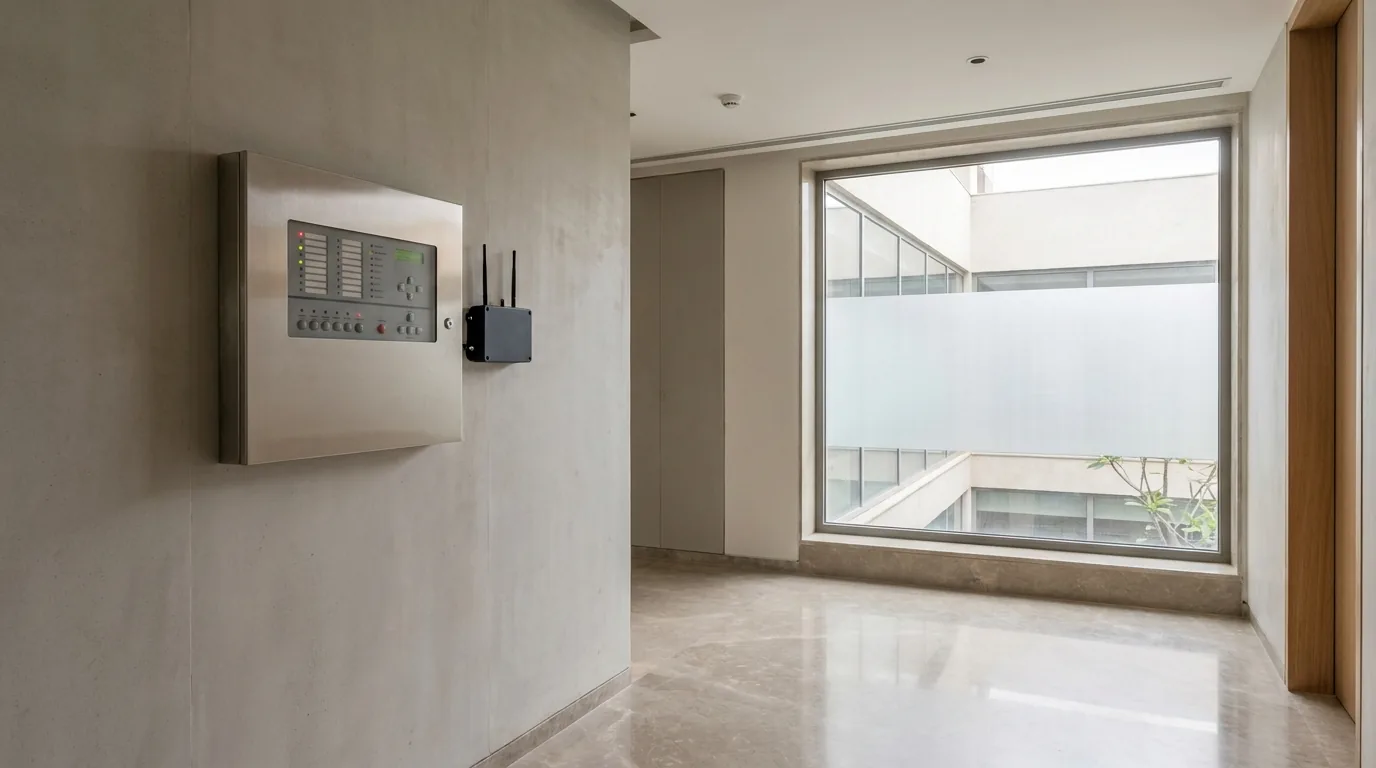
In force from
24 Aug 2026
90 days from gazette publication
The Rules were notified in the Delhi Gazette on 26 May 2026. Most provisions took effect immediately, but Rule 1(3) delays the amendments to Rules 34 to 38, the First Schedule and the Seventh Schedule by 90 days. ACMS sits in Rule 37, with its technical specification in the Seventh Schedule — so both fall on that later date.
Applies to the classes of occupancy in Rule 27, sub-rules (2) to (12), for the purposes of Rule 38(1). Counting 90 days from 26 May gives 24 August; reckoned from the following day it is 25 August. Confirm the date and your building's applicability with the Delhi Fire Service.
Do you qualify
Find your building in this table.
Rule 37 applies ACMS to the occupancy classes listed in Rule 27, sub-rules (2) to (12). Find your occupancy, check the threshold. If your building crosses it, ACMS applies to you.
| Rule | Occupancy | ACMS applies when |
|---|---|---|
| 27(2) | ResidentialOther than hotels and guest houses | Over 15 m, or 5 or more storeys |
| 27(3) | Hotels & guest houses | Over 12 m, or 4 or more storeys |
| 27(4) | EducationalSchools, colleges, institutes | Over 9 m, or 3 or more storeys |
| 27(5) | InstitutionalHospitals, care and custodial | Over 9 m, or 3 or more storeys |
| 27(6) | AssemblyMalls, cinemas, halls, stations | All assembly buildings, no threshold |
| 27(7) | BusinessOffices, IT parks, banks | Over 15 m, or 5 or more storeys |
| 27(8) | MercantileRetail, showrooms, markets | Over 9 m, or 3 or more storeys |
| 27(9) | IndustrialFactories, plants, workshops | Covered area on all storeys over 250 sq m |
| 27(10) | StorageWarehouses, godowns, depots | Covered area on all storeys over 250 sq m |
| 27(11) | Hazardous | Covered area over 100 sq m |
| 27(12) | Underground structuresBasements, metro, subways | Two or more levels |
Storey counts include mezzanine and stilt floors above ground level. Pandals, listed at Rule 27(1), sit outside the ACMS requirement. Heights and areas are as notified on 26 May 2026 — confirm your building's classification with the Delhi Fire Service before acting.
What changed
Installed no longer means compliant.
For years, fire safety was a certificate you earned once and filed away. The Delhi Fire Service (Amendment) Rules, 2025 end that. Rule 37 requires an Automated Continuous Monitoring System covering both active and passive fire safety measures, kept, in the words of the Seventh Schedule, “in good repair and efficient working condition”. Compliance is now continuous — real-time proof that every pump, tank and panel is alive, not a snapshot taken on inspection day.
Continuous, real-time
System status uploaded every minute over the cloud — not a quarterly check.
Alerts to the right people
To owners, occupiers and empanelled auditors by app, email and SMS — and to the DFS in Phase 2.
IoT + cloud, by spec
Machine-to-machine over MQTTS, connected via 4G/5G/Wi-Fi/Ethernet.
A national direction
Delhi is the first mover, not the last.
Continuous monitoring is not a one-city rule. Maharashtra moved first, Delhi has now followed with a firm deadline, and the national building code points the same way. The buildings that get ahead of it stop scrambling later.
| Where | Instrument | Status |
|---|---|---|
| Delhi | Delhi Fire Service (Amendment) Rules, 2025 — notified 26 May 2026 | Binding law |
| Maharashtra | Fire Prevention & Life Safety Measures (Amendment) — Section 3(3A) | Binding law |
| National | NBCS 2026 (SP 7:2026), National Building Code | Advisory · adopted by states |
Directional summary — verify each rule against its primary gazette text. FlareSens is built for the Delhi ACMS scope and adapts to each state as it moves.
A specification, not a slogan
What the rules actually require.
The mandate is specific about how the monitoring must behave — not just that it exists. Here is what an ACMS has to do, and FlareSens does each by design.
Reports every minute
Every firefighting system uploads its status continuously — at least once a minute, not once a quarter.
Secure IoT transport
Machine-to-machine over encrypted MQTTS, connected via 4G, 5G, Wi-Fi or Ethernet.
Silence is a fault
If a device stops reporting, it is raised as a fault — a dead sensor can’t hide between inspections.
Survives a power cut
Backup power keeps monitoring alive when mains drops, so the panel is watched exactly when it matters most.
A tamper-evident log
Thousands of timestamped events retained and audit-ready on demand — proof the system was working.
Two-phase escalation
Alerts to owners, occupiers and auditors first; critical alarms straight to the Delhi Fire Service in Phase 2.
The Seventh Schedule
Exactly what has to be monitored.
The Seventh Schedule does not leave this to interpretation. It names every parameter an ACMS must report and, for the critical ones, how each should be picked up. This is the specification your installer has to meet.
| System | Parameter monitored | Mode of integration |
|---|---|---|
| Hydrant | Main hydrant pump run status | Water differential pressure switch |
| Standby diesel / electrical pump run status | Water differential pressure switch | |
| Jockey pump run status | Water differential pressure switch | |
| Booster pump run status | Water differential pressure switch | |
| Power to main hydrant pump (on / off) | Voltage sensor at Motor Control Centre | |
| Hydrant riser low pressure | Pressure switch or transmitter | |
| Diesel tank low level | Level sensor | |
| Sprinkler | Main sprinkler pump run status | Water differential pressure switch |
| Power to main sprinkler pump | Voltage sensor at Motor Control Centre | |
| Sprinkler riser low pressure, below 5 bar | Pressure switch or transmitter | |
| Fire water tank | Underground / above ground tank level | Ultrasonic water level device |
| Overhead tank low level | Ultrasonic water level device | |
| Detection | Detection operation status (on / off) | Panel integration |
| Control and repeater panel status | Panel integration | |
| Control panel battery status | Panel integration | |
| Manual call point operation status | Panel integration | |
| Life safety | Public address system status | System integration |
| Staircase pressurisation fan run status, all exits | Run status signal | |
| Lift lobby and hoistway pressurisation fan run status | Run status signal | |
| Basement supply and exhaust fan run status | Run status signal |
Parameters and integration modes as set out in the Seventh Schedule. Data is sent from a local IoT gateway to a cloud portal for real-time monitoring and report generation.
How FlareSens complies
Every component the rules name. One platform.
FlareSens monitors the full firefighting system in real time — not just the alarm panel — and works with whatever OEM equipment you already have.
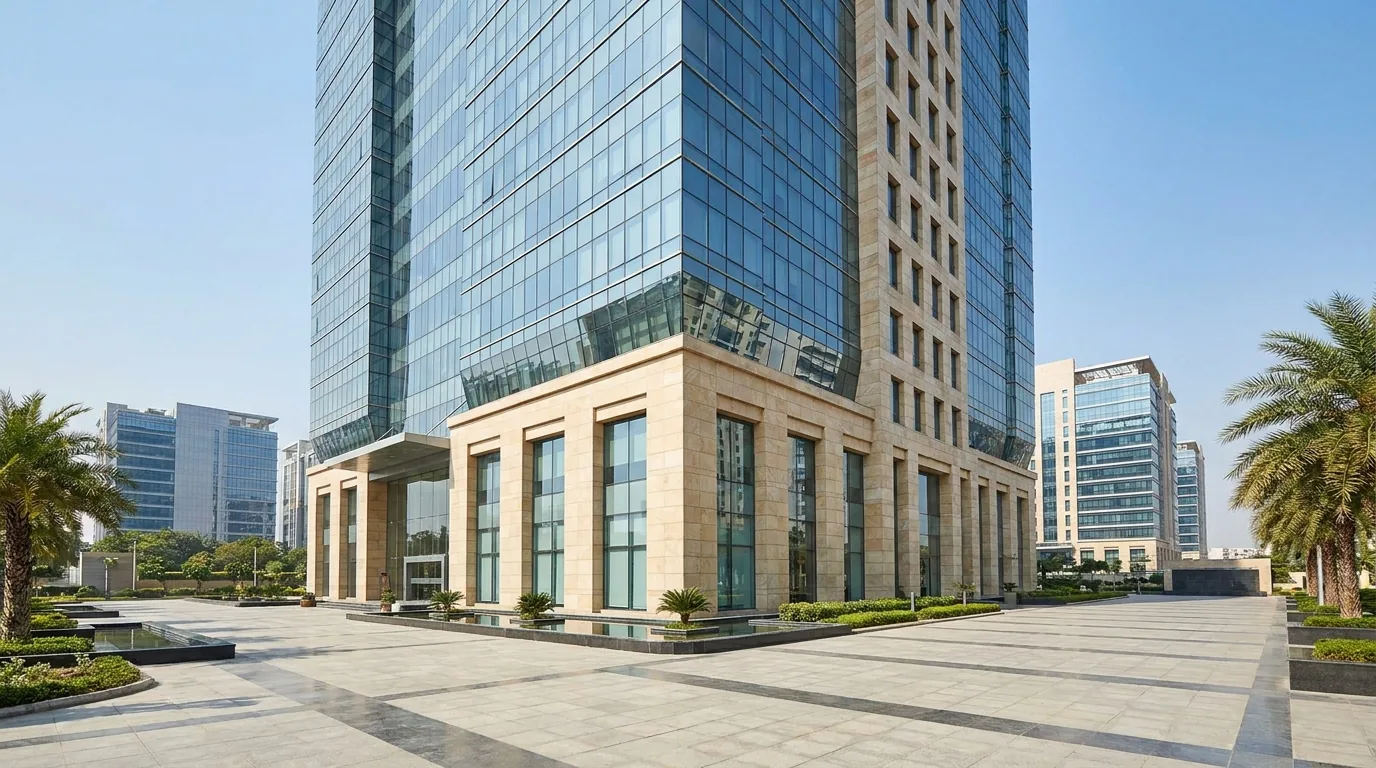
Hydrant pumps — main, standby (diesel & electric), jockey & booster
Fire water tanks — underground & overhead levels
Sprinkler risers & pressure
Fire alarm control panels — any OEM
Manual call points & detection systems
Pressurisation fans & basement ventilation
Ready for both phases
Alerts, exactly as the rules stage them.
Owners, occupiers & auditors
Real-time alerts and system-health reports to the owner or occupier and the fire safety auditor engaged under Rule 35, by mobile app, email and SMS. The Seventh Schedule requires Phase 1 to begin with immediate effect once the rules come into force.
Direct to Delhi Fire Service
Critical alarms — pump power failures, low hydrant and sprinkler pressure, fire alarm faults — transmitted straight to the DFS. The Seventh Schedule states Phase 2 follows at a later stage; no date has been fixed for it.
Why FlareSens
Compliant today. On the systems you already own.
OEM-independent
Connects to any panel, pump or system — whatever the brand. No rip-and-replace.
Already live in India
Deployed across enterprises today, certified to EN 54 and ISO 9001.
Fast to compliant
Non-intrusive install beside your existing equipment — ACMS-ready in days.
The Delhi Fire Service (Amendment) Rules, 2025 were notified in the Delhi Gazette on 26 May 2026. Most provisions took effect on publication, but Rule 1(3) delays the amendments to Rules 34, 35, 36, 37, 38, the First Schedule and the Seventh Schedule by 90 days. ACMS is Rule 37 and its technical specification is the Seventh Schedule, so both fall on the later date — on or about 24 August 2026, counting 90 days from 26 May. Confirm the exact reckoning and your building’s applicability with the Delhi Fire Service.
Rule 37, “Automated Continuous Monitoring System”, is the operative provision. It requires an ACMS for fire prevention and fire safety measures to be provided by the owner or occupier, as specified in the Seventh Schedule, for the classes of occupancy identified in sub-rules (2) to (12) of Rule 27, for the purposes of sub-rule (1) of Rule 38. Rule 37 also provides that the ACMS shall comply with such technical standards and cyber security protocols as may be notified by the Director.
ACMS stands for Automated Continuous Monitoring System. The Delhi Fire Service (Amendment) Rules, 2025 mandate an IoT-based ACMS that monitors a building’s firefighting systems in real time — pumps, tanks, sprinkler risers, fire alarm panels, manual call points, pressurisation fans and more — and sends alerts to owners, occupiers and empanelled fire safety auditors, with critical alarms transmitted to the Delhi Fire Service in the second phase.
Yes. FlareSens monitors the full firefighting system named in the rules — hydrant, standby, jockey and booster pumps, underground and overhead water tanks, sprinkler risers, fire alarm control panels, manual call points, pressurisation fans and basement ventilation — in real time, over the cloud, with alerts to owners, auditors and the Delhi Fire Service.
Rule 37 applies ACMS to the classes of occupancy in sub-rules (2) to (12) of Rule 27. Those are: residential buildings other than hotels and guest houses over 15 m or five or more storeys; hotels and guest houses over 12 m or four or more storeys; educational buildings over 9 m or three or more storeys; institutional buildings over 9 m or three or more storeys; all assembly buildings; business buildings over 15 m or five or more storeys; mercantile buildings over 9 m or three or more storeys; industrial and storage buildings with covered area on all storeys over 250 sq m; all hazardous buildings with covered area over 100 sq m; and underground structures of two or more levels. Storey counts include mezzanine and stilt floors above ground level. Note that pandals, listed at sub-rule (1), fall outside the ACMS requirement.
No. FlareSens is OEM-independent and non-intrusive — it connects to the panels, pumps and systems you already have, whatever the manufacturer, with no rip-and-replace and no rewiring. You become ACMS-ready in days, not months.
Yes. FlareSens delivers real-time alerts and system-health reports to owners, occupiers and empanelled auditors via mobile app, email and SMS — and is built to transmit critical alarms to the Delhi Fire Service for Phase 2.
Make your building ACMS-compliant.
Book a 20-minute demo. We will show you real-time monitoring on a live system and map exactly what your building needs to meet the Delhi Fire Service (Amendment) Rules, 2025.