
BLOG
Fire safety insights from the field.
Compliance updates, technology deep-dives, and practical guides for building owners and fire safety professionals.
FEATURED
ALL ARTICLES
Browse by topic

How to Make Your Building ACMS-Compliant Before the Delhi Deadline
Rule 37 takes effect on or about 24 August 2026. The execution path: confirm scope, inventory what the Seventh Schedule names, and the clause-by-clause checklist to hold your vendor to before you sign.
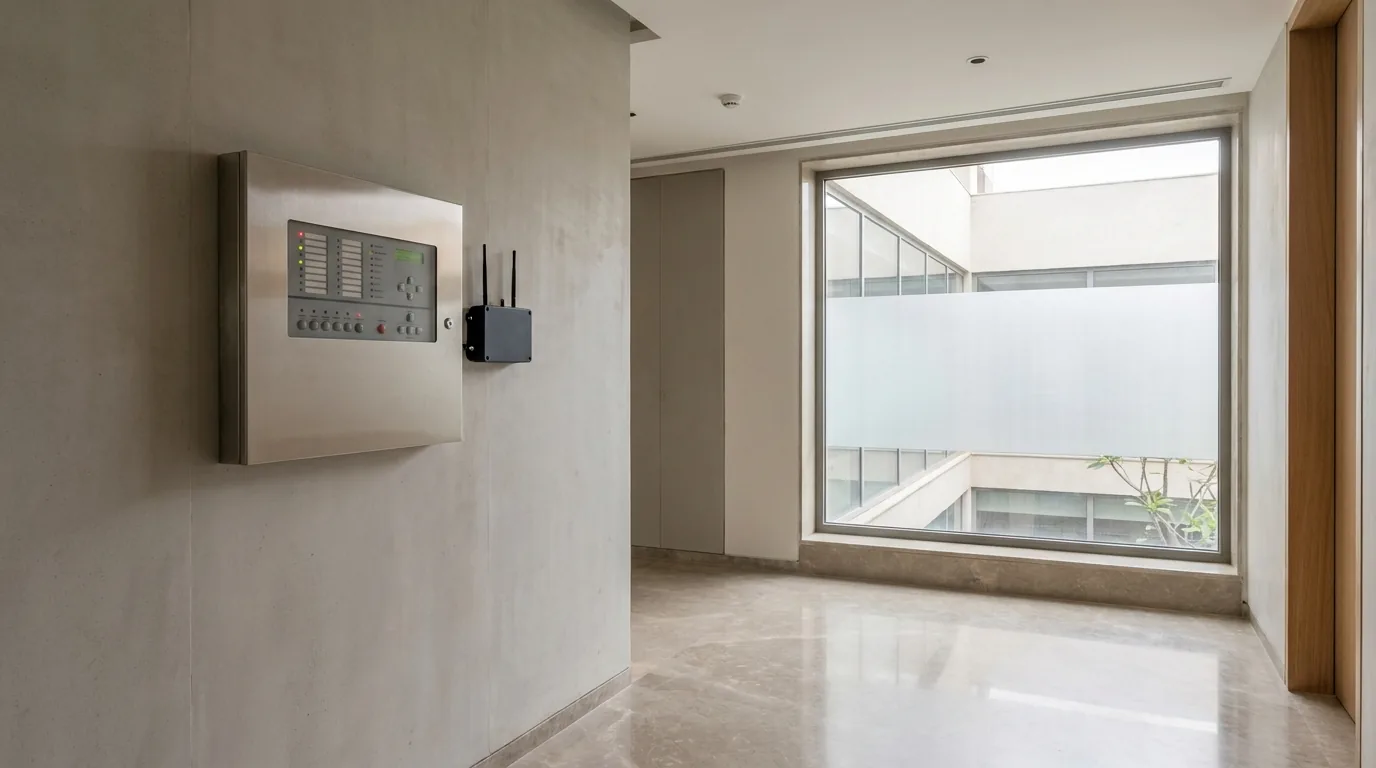
ACMS Explained: Delhi's IoT Fire-Monitoring Mandate, Clause by Clause
Rule 37, the Seventh Schedule and a deadline of on or about 24 August 2026. Which buildings qualify, every parameter that must be monitored, and the technical specification — sourced from the gazette notification.
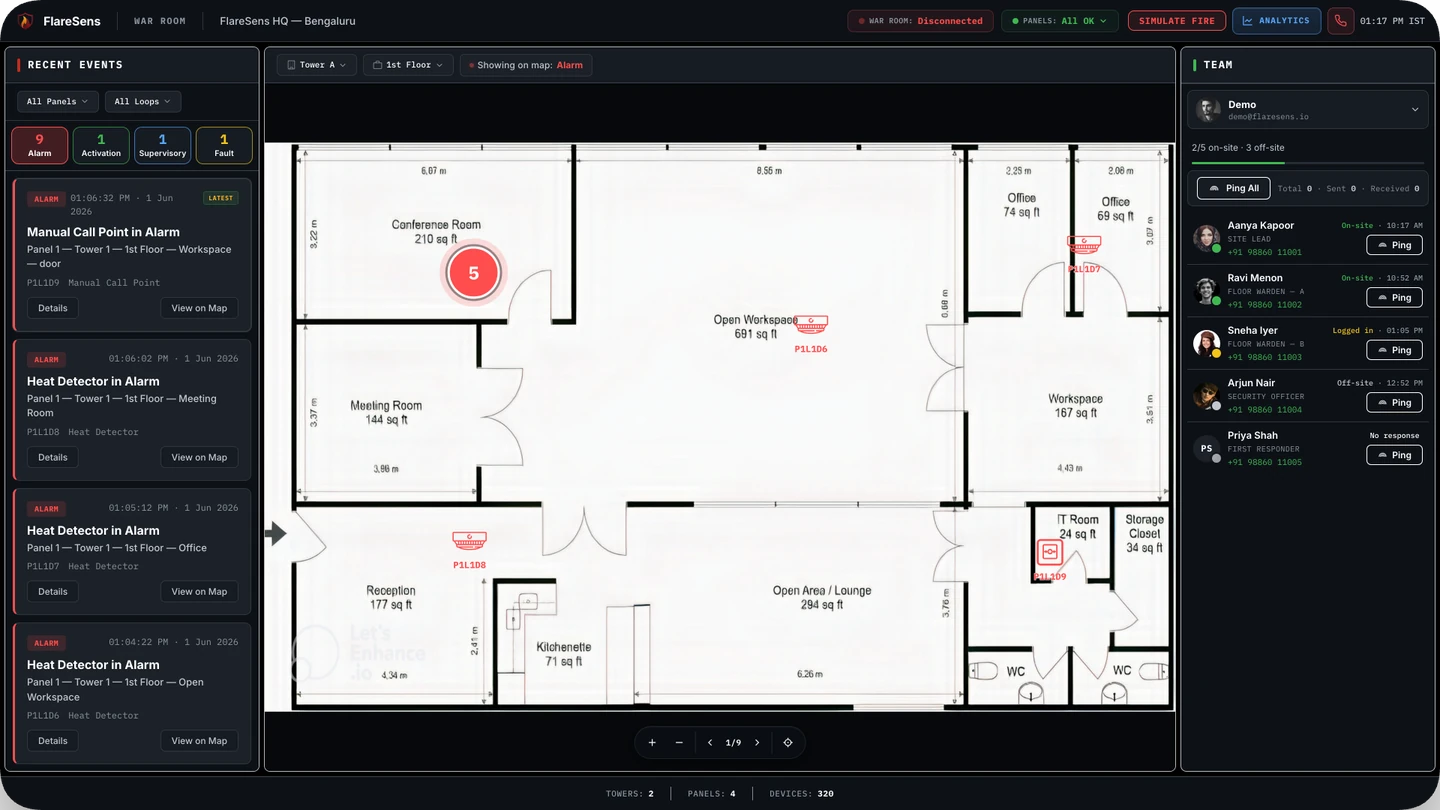
What Is a Fire Alarm Graphic System? An OEM-Independent Guide
A fire alarm graphic system shows your panel on a live floor plan. How graphic systems work, why most are locked to one panel brand, and what OEM-independent means for buildings that run more than one manufacturer.

NBCS 2026 Part F: What Actually Changed, and What It Means for Your Building
NBC 2016 was withdrawn on 30 April 2026 and replaced by NBCS 2026 (SP 7:2026). A clause-by-clause read of Part F: whether it binds you, which buildings it covers, what changed, and the rules for altering an existing building.
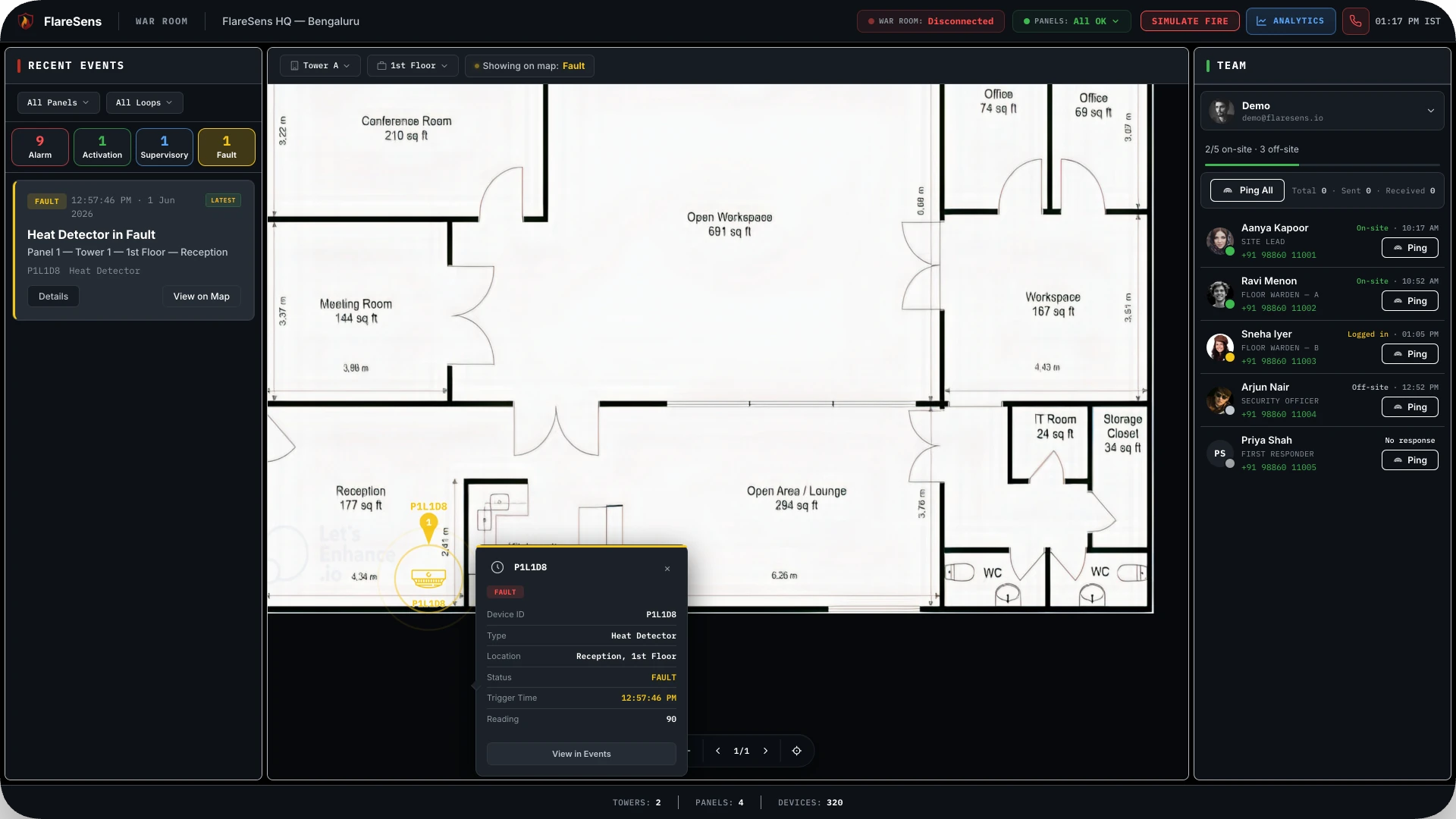
IoT-Based Fire Monitoring vs Traditional AMC: A Real Comparison
Annual maintenance contracts have been the default for decades. But a quarterly visit can't catch a panel fault at 2 AM. Here's how real-time cloud monitoring changes the equation for building owners.
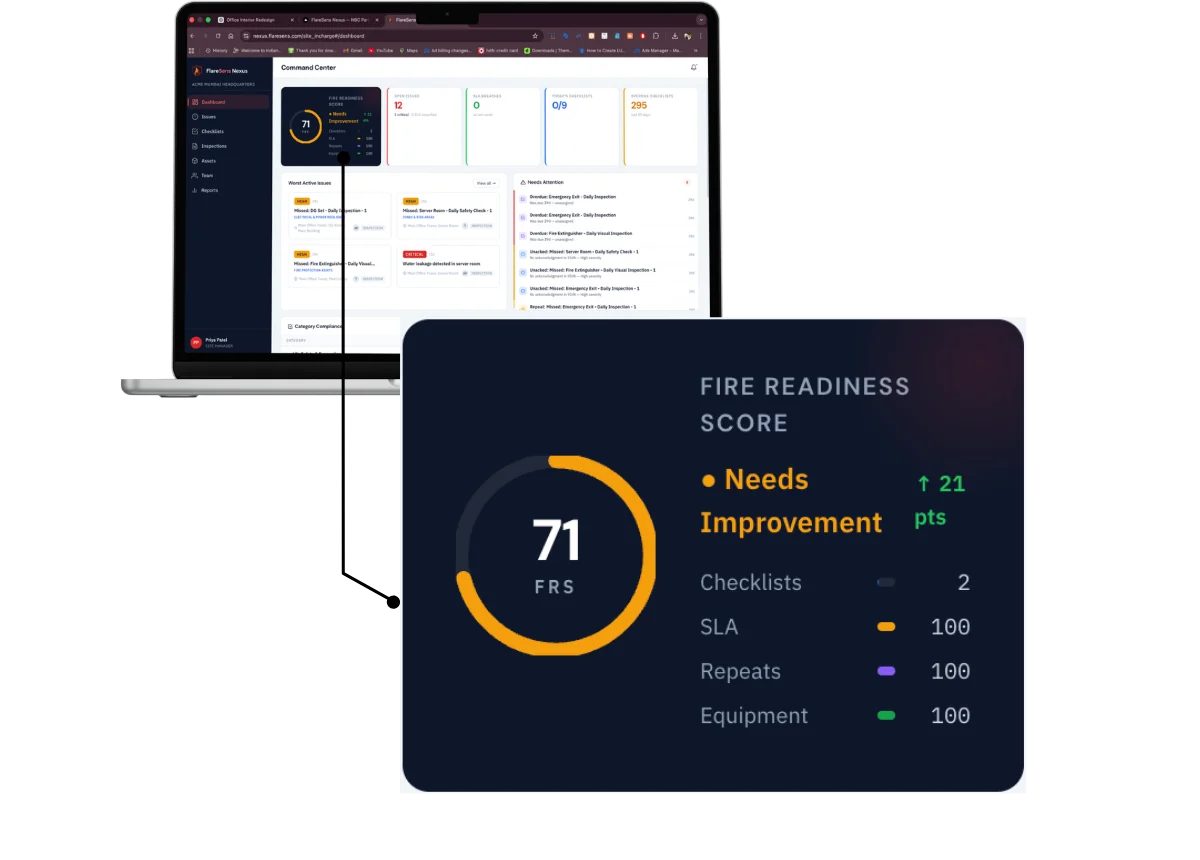
What Is a Fire Readiness Score — and Why Does Your Building Need One?
A single number from 0 to 100 that captures your entire fire safety posture. We explain how the FRS is calculated, what each band means, and how leading facility managers use it to drive accountability.

5 Fire Safety Blind Spots in Indian Hospitals
Hospitals face unique fire safety challenges — from oxygen-rich environments to patients who can't self-evacuate. We examine the five most common gaps and how continuous monitoring addresses each one.
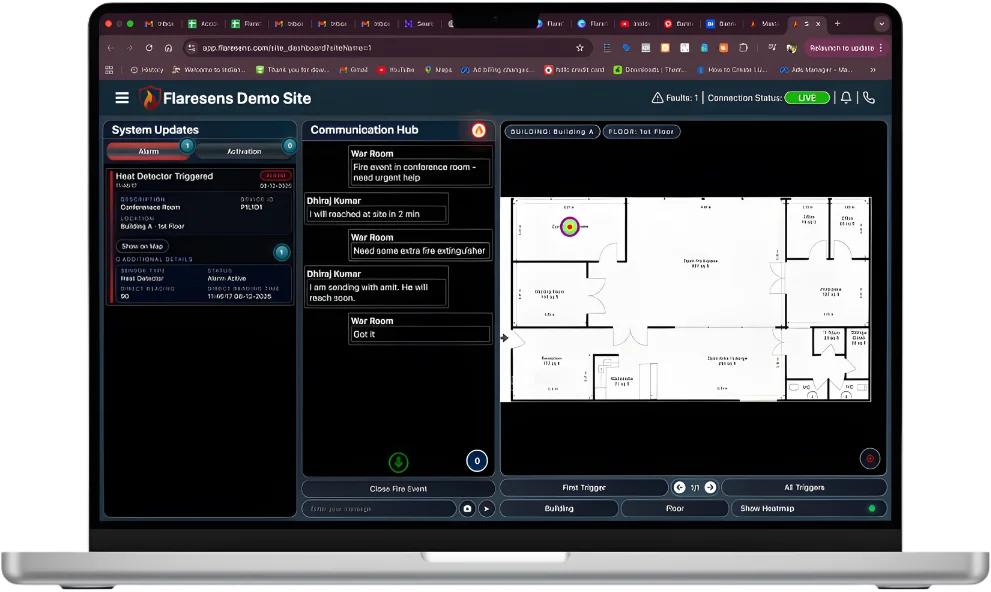
BACnet and Modbus: How FlareSens EDGE Talks to Every Fire Panel
OEM-independent monitoring means connecting to panels from different manufacturers. Here's how FlareSens EDGE uses BACnet and Modbus protocols to achieve device-level visibility regardless of the brand.
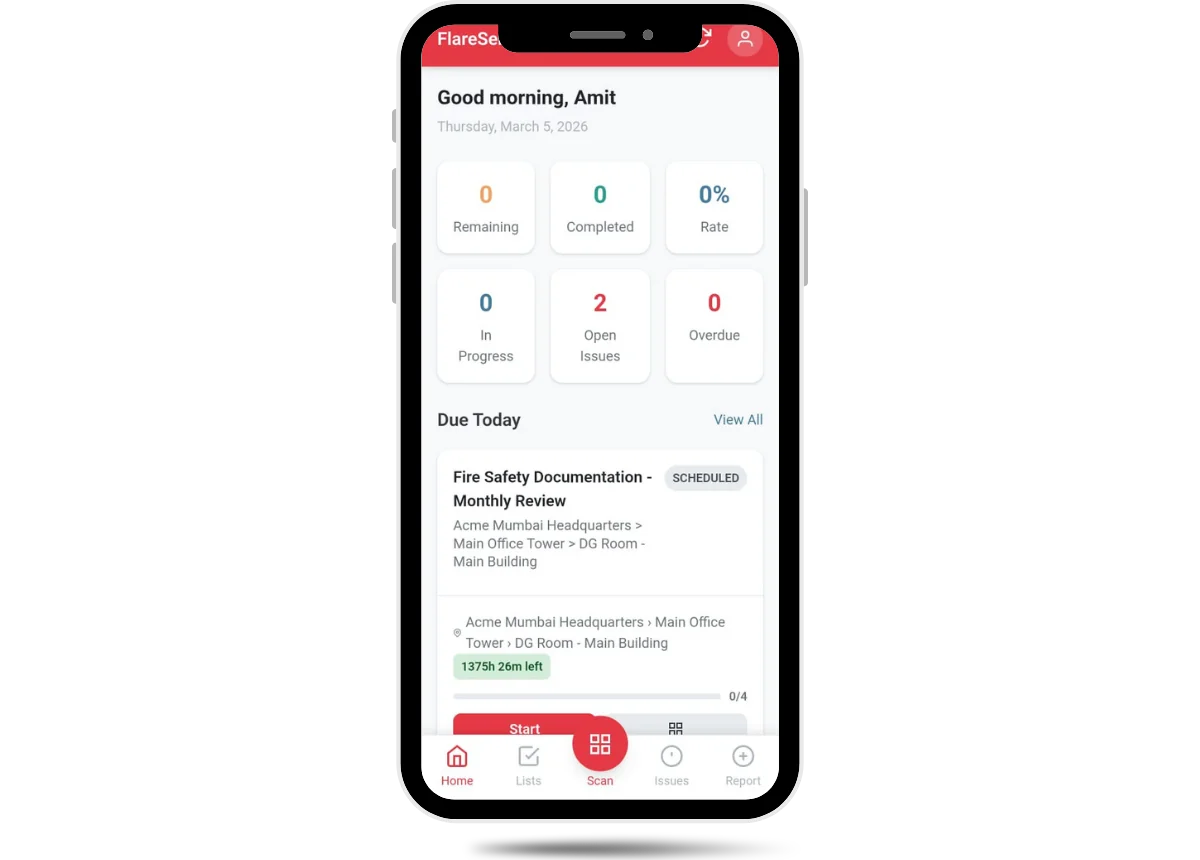
The Digital Fire Safety Audit Checklist: Moving Beyond Paper
Paper-based checklists get lost, faked, or forgotten. Digital inspection workflows with photo evidence, timestamps, and automatic scoring are becoming the new standard for fire compliance.
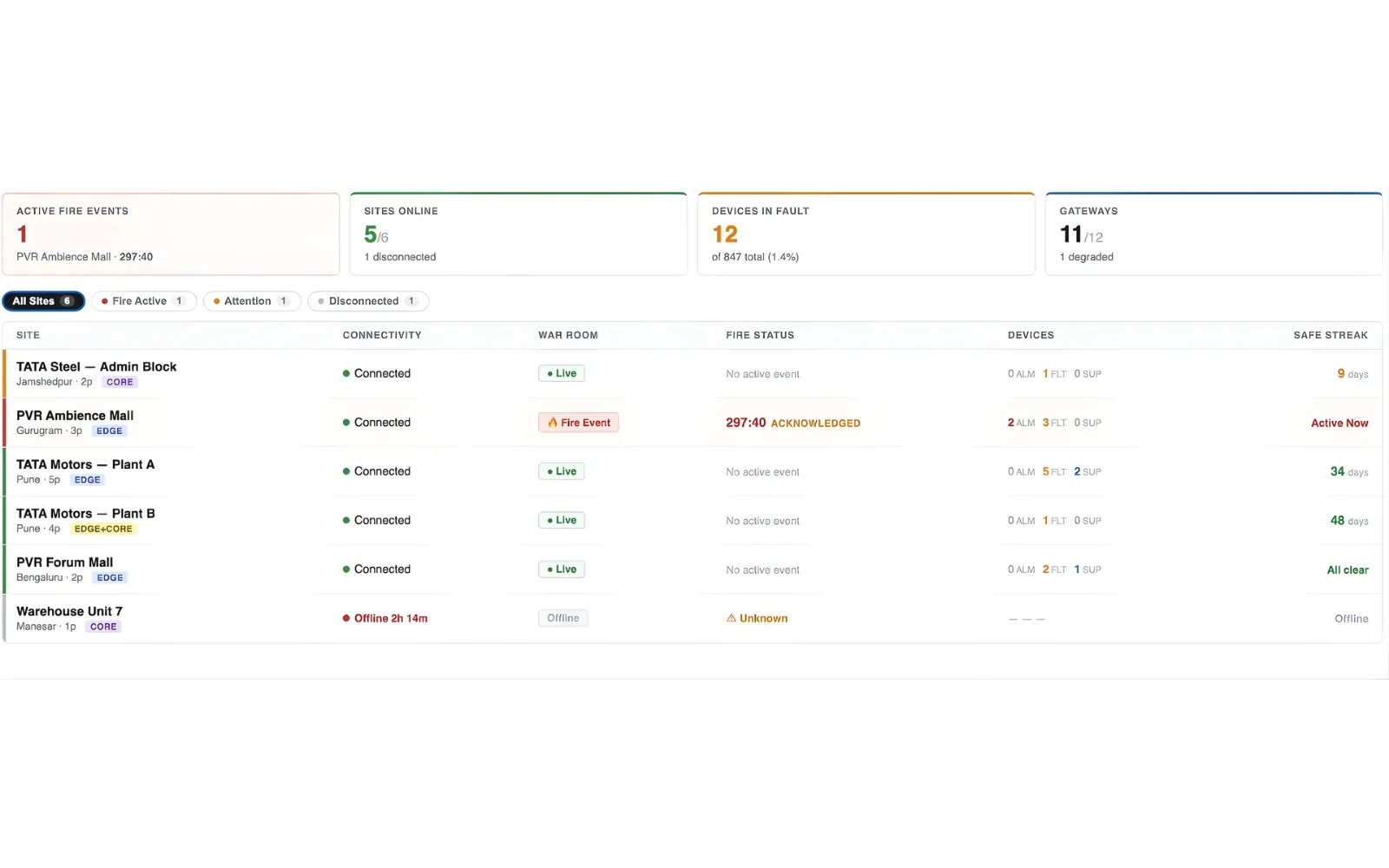
Managing Fire Safety Across 50+ Sites: A Portfolio Approach
When you're responsible for fire safety across a real estate portfolio, you need more than site-by-site reports. Learn how cloud-based dashboards give facility heads a single source of truth.
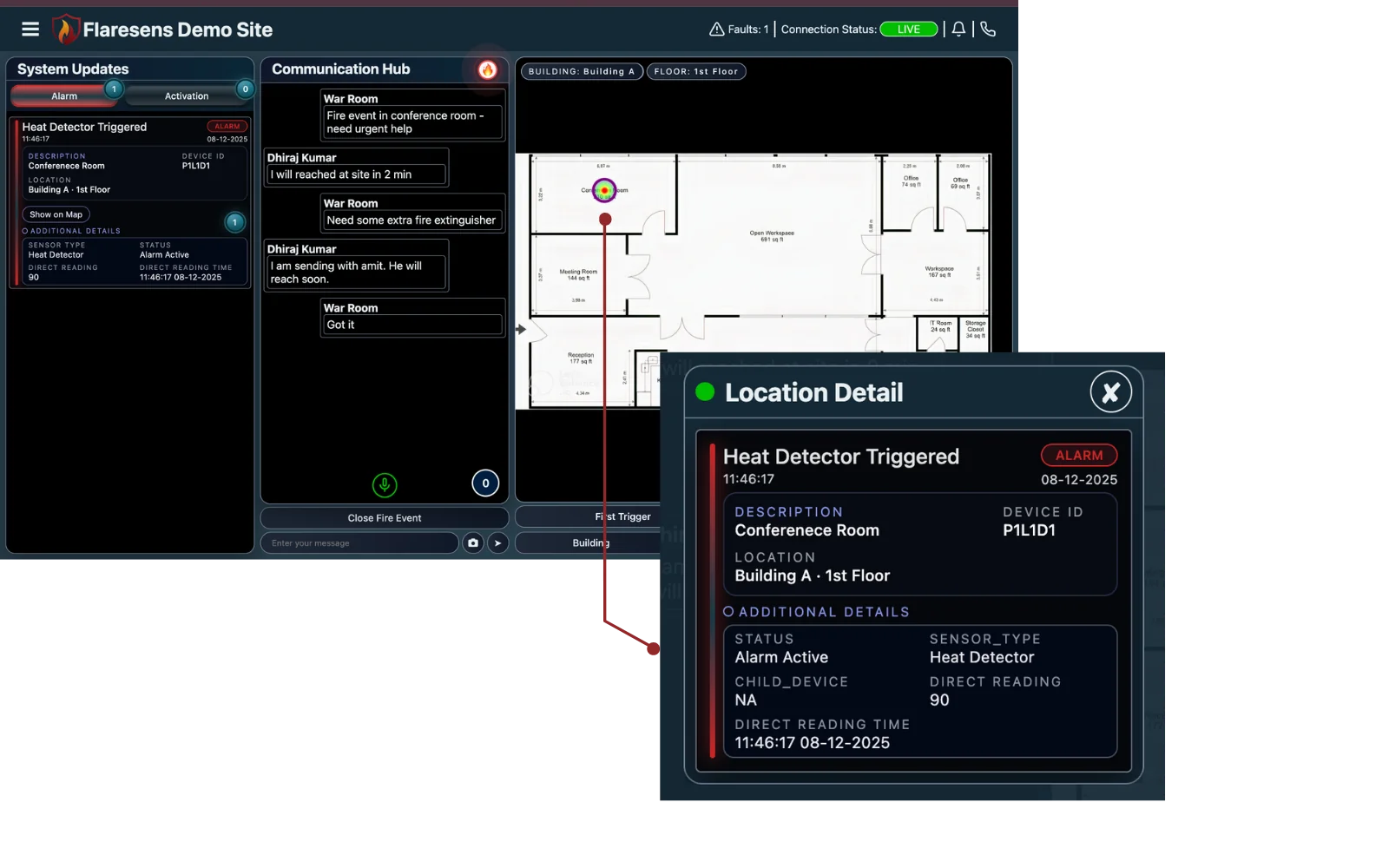
Introducing Rapid Action Suite: Fire Alerts on Every Phone
When a fire alarm triggers, every second matters. Rapid Action Suite delivers loud siren alerts with the exact building, floor, and detector ID to your team's mobile phone — instantly.
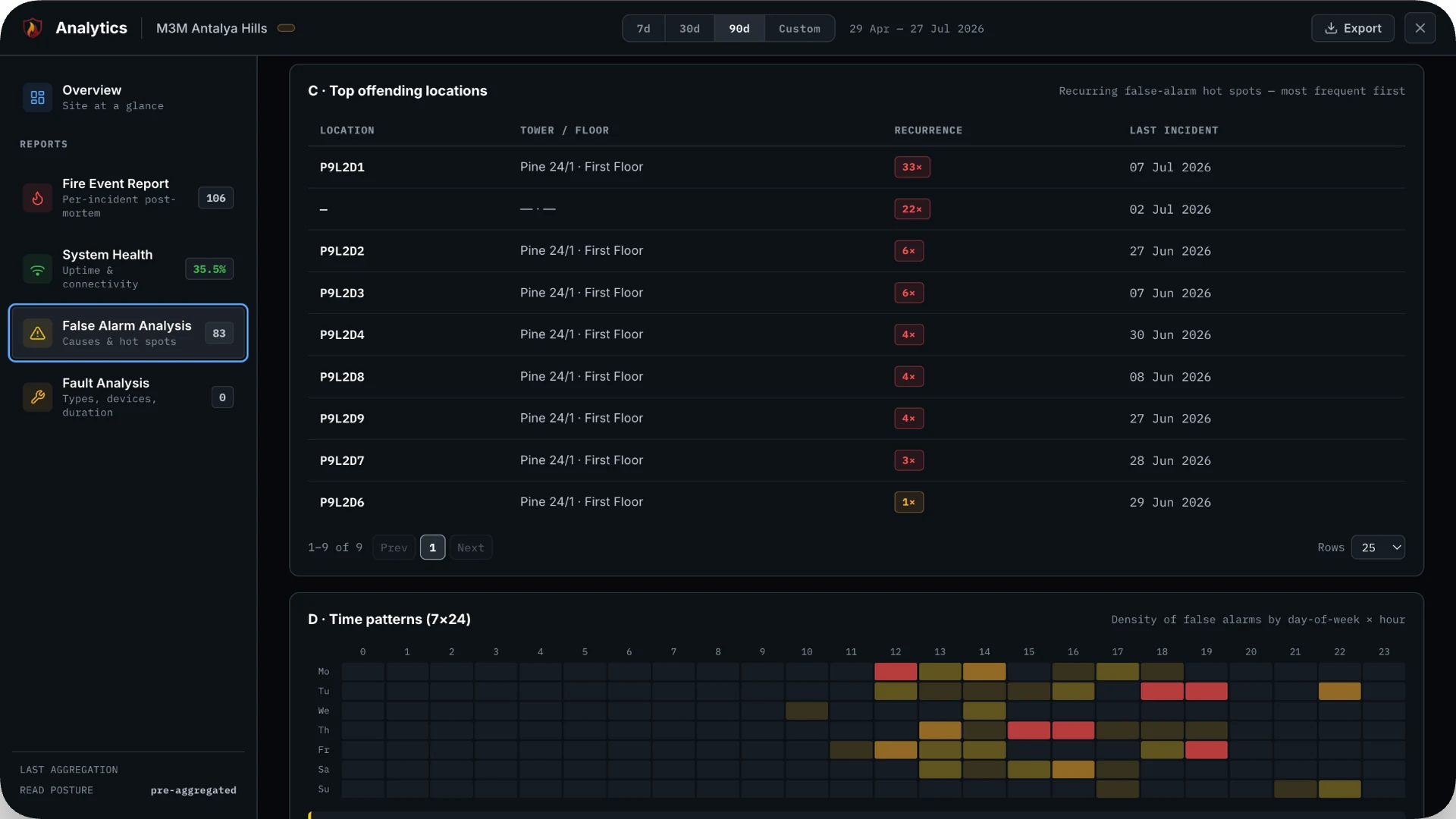
Reducing False Fire Alarms: Data-Driven Strategies That Work
False alarms erode trust and waste resources. With continuous monitoring data, building managers can identify patterns — dusty detectors, HVAC interference, kitchen proximity — and fix root causes.
Get fire safety insights delivered to your inbox.
Compliance updates, product launches, and practical guides. No spam — just signal.
Or reach out at enquiry@flaresens.com